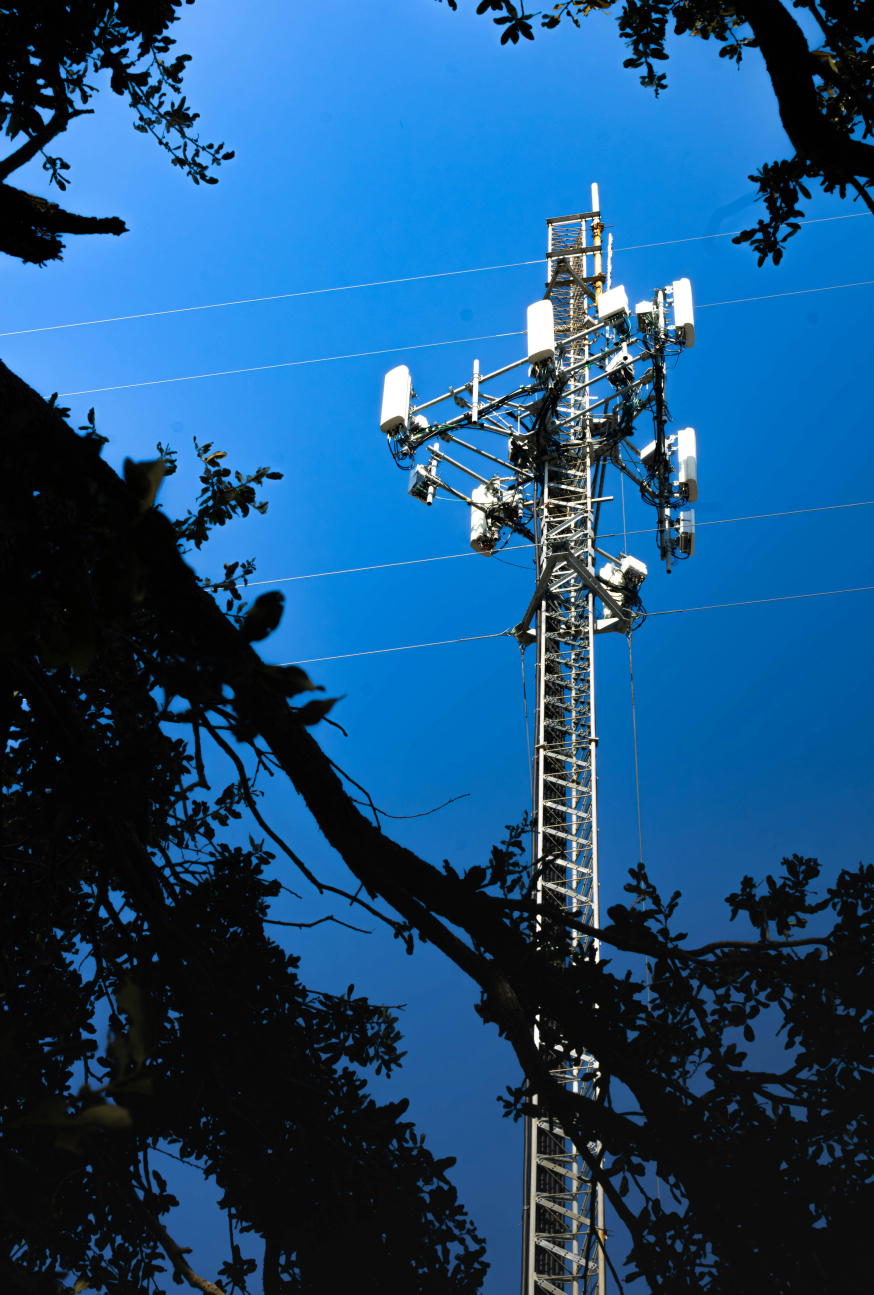

The technology is expected to be commercially available around 2030 and promises a fundamental shift in how networks operate. Not only will speed and latency improve, but the role of AI, satellite networks, and new frequencies will also change drastically. Therefore, it is wise for IT architects and infrastructure teams to understand where 6G is headed now.
What exactly is 6G?
6G stands for the sixth generation of mobile communication technology and follows 5G. Like previous generations, the standard is being developed under the coordination of international organizations such as the International Telecommunication Union (ITU) within the IMT-2030 program.
The goal of 6G is not only higher data speeds but also an intelligent, autonomous network infrastructure in which AI plays a central role. Networks should be able to optimize themselves, manage spectrum, and dynamically adjust services.
While 5G primarily improved bandwidth and latency, 6G aims to create a platform where connectivity, computing, and sensing converge. And there has already been significant work on this, even in the Netherlands.
6G Timeline
Although much research is already underway, 6G is still in the R&D phase. Most telecom organizations expect:
- 2022-2026: fundamental research and initial test networks
- 2027-2028: pilots and standardization
- 2030: first commercial rollout
This roadmap is being developed by organizations such as 3GPP and telecom providers.
The main technical differences with 5G
Although many specifications are still in development, some clear characteristics are already emerging.
1. Data speeds up to 1 Tbps
Researchers expect that 6G can achieve data speeds of up to 1 terabit per second, dozens to hundreds of times faster than 5G.
This is made possible by new frequency bands, particularly terahertz spectrum (THz).
2. Ultra-low latency
Latency could drop to around 0.1 milliseconds, enabling real-time applications such as autonomous systems, remote robotics, and industrial automation.
For companies, this means that applications such as digital twins, real-time AI analysis, and autonomous logistics become more realistic.
3. AI-native networks
One of the biggest differences from previous generations is that AI is integrated directly into the network architecture.
AI can be used for example for:
- dynamically allocating spectrum
- automatic network optimization
- predictive maintenance
- real-time traffic management
This makes the infrastructure largely self-optimizing and self-healing.
4. Terahertz communication
6G research is strongly focused on terahertz frequencies (300 GHz – 3 THz). This means extremely high data speeds and enormous capacity, but also a short range and sensitivity to obstacles.
Therefore, techniques such as ultra-massive MIMO and intelligent reflecting surfaces are being researched to better direct and amplify signals.
5. Integration of satellite and terrestrial networks
Unlike previous generations, 6G will likely seamlessly combine satellite, aerial, and terrestrial networks.
This means that mobile devices may connect directly to satellites, making global coverage more realistic.
This could be particularly relevant for:
- remote areas
- maritime applications
- IoT infrastructure
- emergency communication
What 6G could enable
Many of the applications that are still experimental are often linked to 6G. What can we do with 6G? Well, this.
Extended reality (XR)
AR and VR applications require enormous bandwidth and low latency. 6G should enable streaming immersive XR experiences without noticeable delay.
Autonomous mobility
Self-driving vehicles, drones, and robotics need real-time communication with infrastructure and cloud systems.
Smart cities and industrial automation
Sensors, IoT devices, and robots can collaborate via 6G with extremely low latency.
Networks that can "see"
Researchers are working on Joint Communications and Sensing, where networks can detect objects or movements via radio signals. We might have to be a little less happy about that...
What does 6G mean for IT architects?
Although 6G is still years away from mass adoption, trends are already visible that will influence IT strategies.
- AI and edge computing are becoming core components of networks
- Networks are evolving towards hybrid cloud and satellite infrastructures
- Data-intensive applications such as XR and digital twins are becoming more realistic
- Security architectures must account for AI and quantum threats
In short: 6G is less about speed and more about intelligent infrastructure. It is still in the research phase, but the outlines are becoming clearer. The next generation of mobile networks is about AI-driven infrastructure, terahertz communication, and integration with satellite systems.
For IT professionals, this means that networks are increasingly transforming into an intelligent platform for data, AI, and real-time applications. The real impact of 6G will likely not only be visible in smartphones but especially in industry, infrastructure, and autonomous systems.