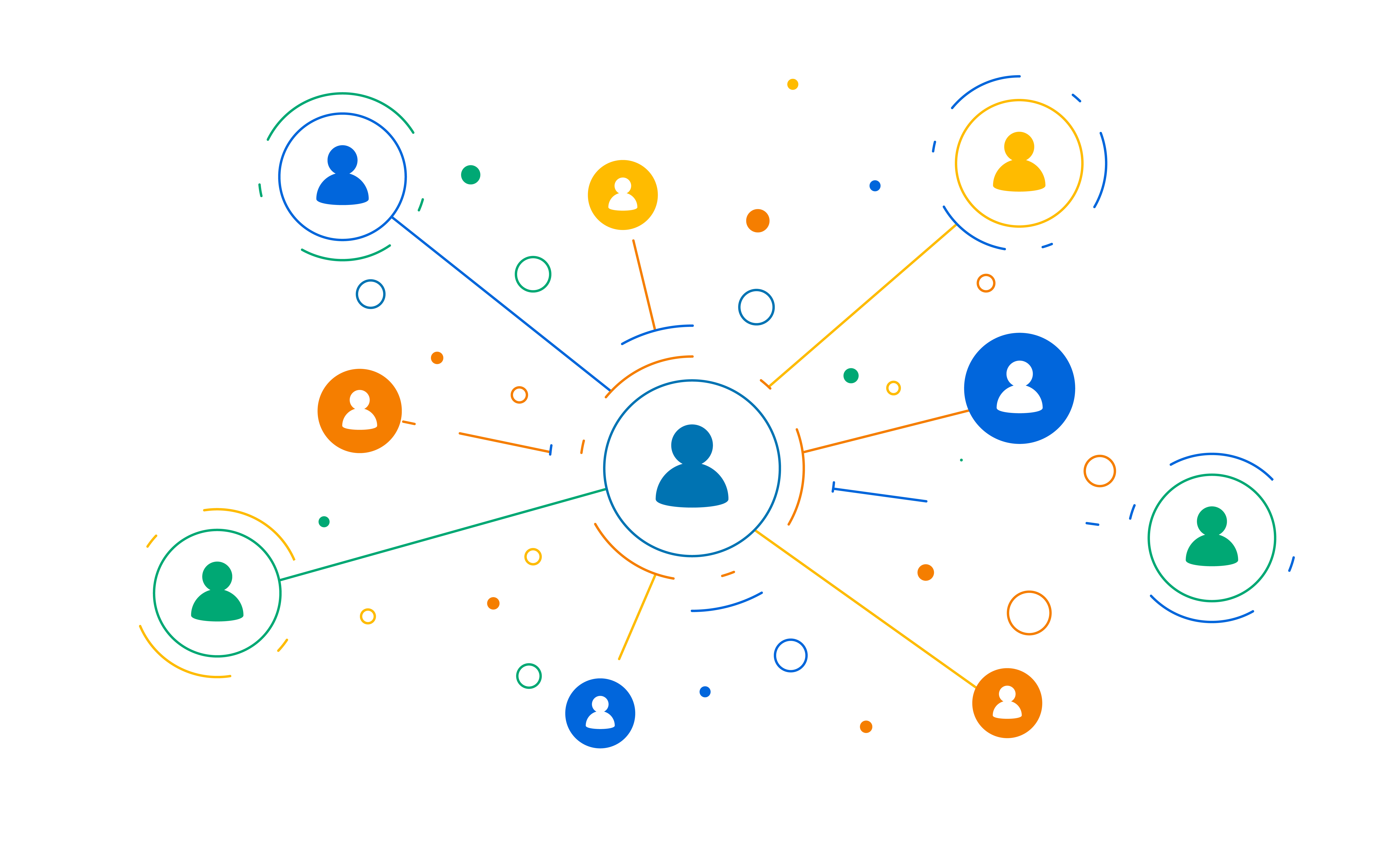

Connectivism is a learning theory formulated at the beginning of this century as a response to the limitations of existing models such as behaviorism, cognitivism, and constructivism. Siemens and Downes argue that learning in the digital age primarily occurs through networks of people, systems, and technologies. The core of their thought: knowledge resides not only in people but also in networks and tools. Learning is the ability to build, maintain, and utilize those networks.
Important principles of connectivism are that learning occurs across platforms, meaning not from just one way. Yes, an individual can learn directly from a teacher or expert in a training session, but just as well through a tutorial on YouTube, a conversation with an LLM, or a discussion via Discord. Connectivism states that learning from different channels is essential, especially with the speed at which information moves and the amount that comes at us in the digital age. Staying up-to-date is more important than ever and is only possible by working in a network.
Because of this, George and Stephen also find it more important to be skilled at making connections than at memorizing facts. The question 'what do I know?' is secondary to the question 'do I know where I can find something and when it is relevant?' and switching between documentation, colleagues, and networks is more valuable than having an encyclopedic memory.
Thus, in connectivism, it is not a weakness not to know things by heart. Rather, the ability to effectively utilize external knowledge sources is very handy. This can be done by building a personal knowledge system, for example via Obsidian, or with bookmarking systems tailored to one's own learning behavior. In addition to the 'what', the 'where', and the 'how' are also important to store, to provide others with insight into the learning process.
Connectivism in IT
Connectivism is particularly recognizable for IT teams. Think of developers who find a solution via Stack Overflow, engineers who share scripts via GitHub, or security professionals who follow updates in specialized Telegram groups. Knowledge resides in the infrastructure of tools and in the collective of professionals. The team members who function most effectively are not necessarily the 'smartest', but those who can quickly find, assess, and apply relevant information.
Moreover, the way of working within IT increasingly calls for learning networks:
- Agile methodologies revolve around continuous feedback and joint knowledge building.
- DevOps is particularly a cross-functional approach where knowledge sharing is central.
- Cloud-native infrastructures require up-to-date knowledge of tools and dependencies.
Connectivism aligns with this by recognizing that the network itself is a learning field.
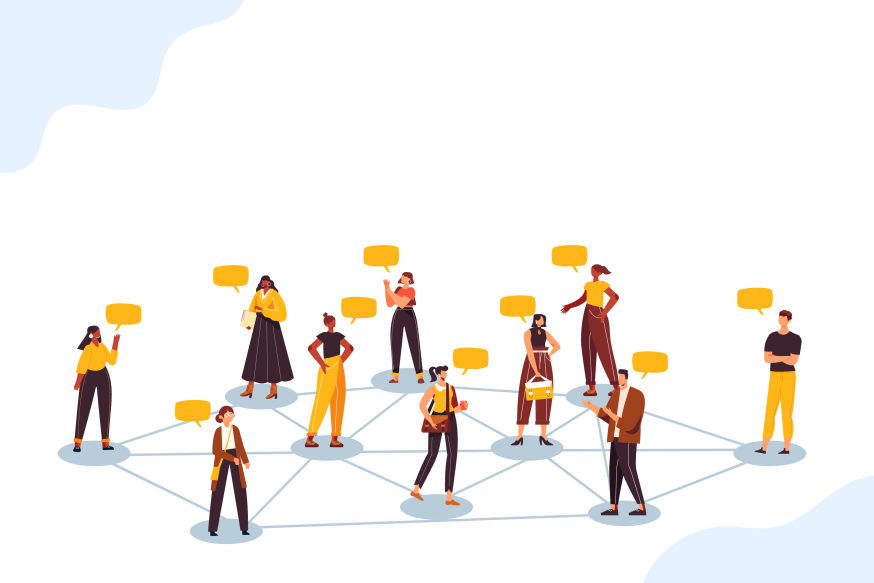
Applications in practice
Connectivism has many applications in IT. We list the most important ones below.
1. Make network learning explicit
Encourage fellow IT professionals to share their resources: favorite blogs, Discord channels, podcasts, or open source communities. These networks form the core of their professional development.
2. Reward knowledge sharing, not just output
A pull request or deployment is important, but sharing insights in retrospectives or via internal wikis deserves just as much appreciation.
3. Facilitate platform-independent knowledge infrastructure
Use tools like Notion, Confluence, or Obsidian where links, updates, and contexts naturally come together – as a digital network of knowledge.
4. Learn also from outside your team
Connectivism emphasizes the importance of external networks in IT. Encourage participation in open source projects, let people blog or present internally what they learned externally.
5. Train the learning itself
Provide IT professionals not only with content training but also teach them how to learn: smart searching, assessing sources, giving peer feedback, and documenting.
From documentation to dialogues
Where classical learning models focus on knowledge transfer, connectivism takes the step towards knowledge development in real-time network contexts. For IT teams, this means that learning is no longer something that happens during a course or training, but during a code review, a Slack discussion, or a bug fix. By approaching the learning behavior of teams as a living network - just like the technology they work with - an adaptive, learning organization emerges. And that is exactly what is needed in an IT world that never stands still.